Tuesday, April 24, 2012

My Hydro


Several days ago, my head is aching just thinking about my hydro set-up.

This was how I decided it to be:


boring holes


Sunday, April 15, 2012

SARI-SARI


“Sari-sari” in Tagalog (our native dialect) means “variety”. 
So, a sari-sari store is a “variety store” selling various valuable items.

Likewise, this blog is about a variety of items: peppers, ripe tomatoes, newly-transferred lettuce, tomato plants in ice cream container. 

Enjoy viewing! 


colored markers in place & styro is ready for cutting (cute :]]]])


newly-transferred iceberg lettuce

ready for transfer


          iceberg lettuce’ new “home”


  tomatoes in ice cream container (DWC)


    ripe tomatoes


         peppers everywhere!! 


cooking mode:


                                                                   chili garlic shrimp w/ basil


Sunday, April 8, 2012

Holy Week Respite 2


Today is April 5, 2012- Holy Thursday.

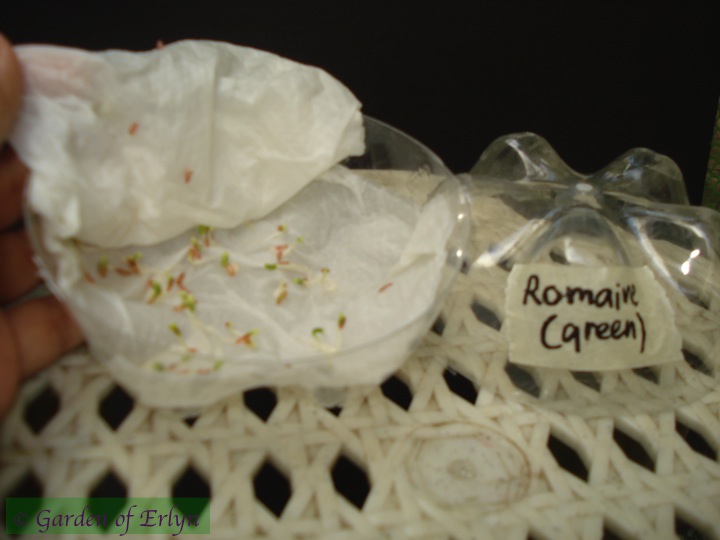
2 days after sowing a variety of lettuce & herbs, glad to note signs of activity in the seed trays of purple basil & arugula.


germination by tissue technique- wake up, wake up!


Today is April 6-Good Friday.


Did a lot of Gardening “chores”:

Transplanted a lot of seeds which I germinated 3 days ago.


3 days after germination- a hump made by tiny plants “pushing” the tissue upwards


     Falbala (red lettuce)


            green Romaine


     Japanese cucumber


New harvest!


                                                                        iceberg lettuce

Black Saturday activities:


   1) Checking the purple basil


2) Harvest & cook.
      look what I got!!


Bought PVC pipes and my head is aching thinking of “design or set-up” for my Hydro that would suit my taste & space.:D …think think...think.

Till next blog.:D


Holy Week Respite


It is a looong weekend in the Philippines (Holy Week plus Heroes Day), so I’m bracing myself for it.

Holy Week for many people out there, is family time, so before my kids complain about my time spent for Gardening alone (heheh =:DDD), as a “peace offering”, I had to cook Cheesy Creamy Penne w/ Fresh Basil.

Of course, fresh Basil came from my garden.


                     So, Garden of Erlyn, i'am ready and here I come whoahh!


Saturday, March 17, 2012

Types of Lettuce

Friends, let's get to know our lettuces:


There are five general types or classifications of lettuce:
·      Butterhead, Crisphead, Looseleaf, Romaine, and Celtuce.

Butterhead and Crisphead types have crisp leaves that form compact hearts.
Looseleaf and Romaine types grow best in cool weather and do not form significant hearts.
Celtuce is a cross between celery and lettuce and is valued for its stem.


Butterhead Lettuce
            Butterhead is a smooth, sweet-tasting lettuce with a delicate, buttery texture. Are sometimes called cabbage lettuce–form a small, loose, slightly flattened head that look something like an open rose.

Varieties:
·      ‘Buttercrunch’ is very tender;
·      ‘Boston’ forms a medium-large head of loosely arranged broad light-green leaves;
·      ‘Bibb’ has a smaller more compact head of short dark-green leaves edged with dark-red;
·      ‘Limestone’ which is very similar to Bibb but is named for the limestone soil in Kentucky and Indiana where it grows best; and
·      ‘Four Seasons’ (‘Merveille Des Quatres Saisons’) has red outer leaves and pink and cream inner leaves.

The botanical name for butterhead lettuce is Lactuca sativa var. capitata.

Crisphead Lettuce         `
             Crisphead lettuce has a solid spherical head of tightly-wrapped, pale green leaves that are crisp and succulent. They have a neutral, watery flavor & is most commonly known as head or iceberg lettuce. This type has outer leaves that are dark green and inner leaves that are greenish white to white. Since it consist of layers of tightly packed leaves, they are more tolerant of heat and keep longer than leaf lettuces.
             The name “iceberg” was given to crisphead in the 1920s when California lettuce growers began shipping lettuce to far off markets in rail cars chilled with crushed ice.
  
Varieties:
·      ‘Great Lakes’, the classic iceberg-type lettuce,
·      ‘Ithaca’, which is glossy-green, frilled-leaf improved iceberg, and
·      ‘Imperial’ with dark green heads.
·      Batavian lettuce is a French type of crisphead that opens like a looseleaf lettuce but later develops a dense head at maturity. It is sweet and juicy without bitterness.

The botanical name of crisphead lettuce is Lactuca sativa var. capitata.

Looseleaf Lettuce
            Looseleaf lettuces form tight rosettes of individual leaves that are crisp and buttery-flavored. They do not form hearts or heads.

            There are many variations in the leaf size, leaf margins, color, and texture of looseleaf lettuces. Some leaves can be smooth, some curled, some ruffled, some crinkled, and some oak-leaf shaped. They can be yellow, green, red, reddish-bronze, or purplish in color.

Varieties are often named for how they look: ‘green leaf’, ‘red leaf’,’ oak leaf’.
·      ‘Green Ice’ is light green and crispy.
·      ‘Red Sails’ has crinkly leaves edged with bright red.
·      ‘Black-Seeded Simpson’ has extra-large frilled leaves.
·      ‘Lollo Rosa’ has frilly magenta leaves with light green edges.
·      ‘Salad Bowl’ has wavy, light-green, deeply lobed leaves.

The botanical name for looseleaf lettuce is Lactuca sativa var. crispa.

Romaine Lettuce
           Romaine lettuce has a large, upright, loaf-shaped head with long narrow stiff leaves that look coarse but are crisp, tender, and sweet. The outer leaves are dark green and 8-9 inches (20-23 cm) long with a distinctive rib that reaches to the tip. The inner leaves are greenish-yellow surrounding a succulent heart.

           Romaine lettuce has been cultivated for more than 5,000 years. It is sometimes called Cos lettuce—named for the Greek island of Kos (Cos) off the coast of Turkey where it is believed to have originated.

          Romaine varieties are very popular in the United States, southern Europe, and Mediterranean countries. Romaine lettuce was given its name by the ancient Romans and is the chief ingredient of Caesar salad.

Common varieties of Romaine lettuce are:
·      ‘Rouge D’ Hiver’ with bronze to deep red, broad, flat leaves,
·      ‘Jericho’ with sword-shaped leaves, and ‘
·      Paris White Cos’.

The botanical name of Romaine lettuce is Lactuca sativa var. longifolia.

Celtuce
           Also known as stem lettuce–is grown for its succulent, thick stem and tender leaves. The name celtuce is a combination of “celery” and “lettuce.” The flavor of celtuce is similar to celery or cucumber or zucchini or artichoke or a combination of the four.

           The stem of celtuce can be pared to remove its bitter skin leaving the soft translucent green core that can be finely sliced and eaten raw in a salad. It can also be sliced or shredded and stir-fried with other vegetables, pork, chicken, or prawns.

           The stem of celtuce can grow about 10 to 12 inches (25-30 cm) long. There are soft green lettuce-like leaves at the end. The young leaves of celtuce can be eaten raw in salads, but the leaves become tough, bitter, and inedible as they mature.

           It is sometimes called "asparagus lettuce" for its stalk’s resemblance to an asparagus spear– is thought to have originated in China. Celtuce grown in China is sometimes pickled and eaten as a side dish.

The botanical name of celtuce is Lactuca sativa var. angustana.


With special thanks to:

Steve Albert
University of California

When Seedlings Fail to Thrive


Plants, just like human beings show/manifest signs when in trouble or is sick.  
Here are common seedling problems and what to do about it:

• Leaf Curl
·      Cause: Too much fertilizer will cause leaves to curl, especially in bright light.
·      Remedy:
o   Decrease or dilute the amount of fertilizer.
o   If the problem is severe, re-plant the seedling in fresh potting soil.

• Yellow Lower Leaves
·      Cause: Too much fertilizer.
·      Remedy:
o   Avoid over feeding young plants.
o   I suggest diluting the fertilizer more and ensure good air circulation around the plants.

• Leggy Plants. A leggy plant has large gaps or spaces between leaves and thin, weak stems.
·      Cause: Insufficient light.
·      Remedy:
o   Make sure the plant is getting sufficient light, but don’t let the temperature get too high.
o   Avoid overcrowding so provide ample spaces in between your plants. 

Leaf Discoloration
·      Cause: Off-colored leaves are often a sign of nutrient deficiency.
o    Pale leaves may be a sign of nitrogen deficiency or lack of enough light.
o   Deep purple veining can indicate a deficiency in nitrogen.
o   Reddish purple undersides can be a sign of phosphorus deficiency; the seedling may also be stunted with thin, fibrous stems. When the soil is too acid, phosphorus is not taken up from the soil.
o   Bronze or brown leaf edges can be a sign of potassium deficiency or overwatering.
·      Remedy:
o   Re-pot the seedling into a medium that contains compost. Compost is likely to contain the trace minerals plants need.
o   In my garden, I used soil substitute such as vermicompost & coco coir dust. I combine the two and my plants seem to be thriving well, whether I use OLF (organic liquid fertilizer) or it’s in the hydroponics set-up.

• Discolored Roots
·      Cause: Overfeeding or overheating (too high temp) which can result in excess fertilizer salts being released into the soil.
·      Remedy:
o   Re-plant the seedlings in fresh soil or leach away the toxic salts. Use well aerated soil and do not overfeed or overwater.

• Mold
·      Cause: Sign of poor drainage and lack of air circulation.
·      Remedy:
o   Scratch the soil to increase aeration, move seedlings to a place with good air circulation. You can also add powdered charcoal to the soil surface.

• Insect Damage
·      Cause: Identify the insect at work. Prevention is always the best course of action.
·      Remedy:
o   Avoid overfeeding which can result in excessive green growth which can attract insects such as aphids.
o   Keep the greenhouse or garden free of plant debris which can harbor sowbugs, slugs, and snails.
o   Place plants where there is good air circulation to slow down spider mites.
o   Use yellow sticky traps (fly trap) to control whiteflies.
o   In my Hydro set-up, I keep insects at bay by enclosing it in a net.
    
• Damping-off. Withered seedlings and plant failure is a sign of the fungal disease called “damping-off”. Damping-off attacks plant stems at the soil surface.
·      Cause: Too much nitrogen and moisture, or too little air circulation.  
·      Remedy:
o   Prevention is the only course of action: maintain good air circulation, avoid overwatering, sow seeds in a sterile medium.
o   You may pre-soak seeds in water with a tablespoon of clove oil or crushed garlic cloves added –these have anti-fungal properties.
o   Or better yet, pour boiling water over the planting medium and allow to cool before re-planting. It will help destroy nematodes or microorganisms thriving on the soil. 

• Poor Root Growth
·       Cause:  Poorly drained soil, insufficient soil fertility, over-fertilization, temp. is too low, starting medium or soil insufficiently aerated.
·       Remedy:
o   Repot the seedling is sterile potting mix and protect the seedling from broad swings in temperature. Keep the soil mix just moist.


With special thanks to:
 Steve Albert
 University of California
 www.harvesttotable.com


When Seeds Fail to Sprout


Seeds require many things to thrive: right watering, optimal temperatures, planting medium, moisture, air circulation, macro/micro elements and light among other things.

When vegetable seeds fail to sprout, what could the problem be? Often the answer is simple and is likely one of these:

• Temperature is either too low or too high. Check the seed packet for the seed’s optimal germination temperature. Most vegetable seeds prefer soil temperatures between 70° and 80°F for germination.

• Seed medium drying out. Seeds must absorb moisture to begin germination. The seed coat expands with water and allows the embryo to begin growth. Sometimes, seed from agri-supply is coated with fungicide, so it must be rinsed first.

• Seeds planted too deep. As a rule of thumb DO NOT plant seeds greater than the width of their diameter; this is often just ¼ to ½ inch deep and sometimes less. Most seeds require light to germinate.

• Too much water. Watering caused seeds sown just below the soil surface to become exposed and float away. Dampen the soil before you sow seed then be careful not to overwater after sowing. Or better yet, use a water sprayer, the one used for orchids will do.

• Insufficient soil contact. Seed coats are tough. Beneficial bacteria in the soil along with moisture help break down the seed coat and allow germination and growth to begin. Gently press down on the soil after you sow seed to make sure the seed and soil come in contact with each other.

• Poor soil. The best soil is half solid matter and half pore space –the pore space contains air and water.
·      Clay soil is flat with no space for air.
·      Sandy soil is too loose and does not hold moisture well.
·      Best soil should be rich in decomposed organic matter or compost (properly aged); this soil will have just what seeds and seedlings need. If you suspect the soil is poor, amend the soil with aged compost and re-sow.

• “Damping-off” disease
·       Damping-off is a fungal disease that can attack just germinated plants. It is often a sign that the soil is too moist or too rich in nutrients. Use a sterile seed starting medium or a soil substitute such as vermicompost or coco coir dust.

• Light and Dark
·      Most seeds require light to germinate; some seeds require darkness. Seeds are light sensitive. Germination often depends on exposure to red light waves–even through soil cover. Check seed packets or grower’s guides to see if special light conditions must be present for germination.


Special thanks to: 
     Steve Albert
       Master Gardener for the University of California
       www.harvesttotable.com